01 April, 2026 - Last week in TI
- Rahul Subramaniam
- Releases
- April 1, 2026
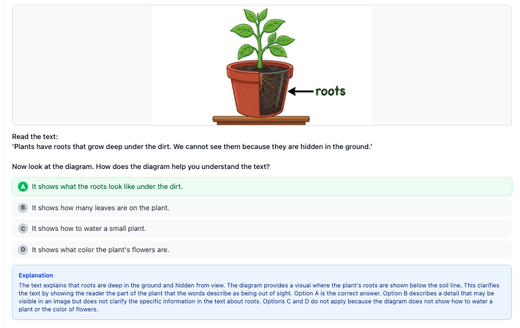
EduLLM ELA: Image Generation, Article-Based Questions & Markdown Formatting
EduLLM ELA now generates questions with images, accepts articles as source material to ground questions in real reading passages, and produces fully markdown-formatted output for cleaner rendering across all platforms.
- Image Generation in Questions – EduLLM ELA now generates relevant images directly within questions, giving students visual context alongside reading comprehension and analysis tasks. Questions can reference diagrams, illustrations, and annotated visuals to mirror the richness of real standardized assessments.
- Article-Based Question Generation – Provide any article or reading passage as input and EduLLM ELA will base all generated questions on that text. This grounds questions in authentic source material, making it easy to create targeted assessments for specific lessons, topics, or reading levels.
- Markdown-Formatted Questions – All generated questions and answer choices are now fully markdown-formatted, ensuring consistent, readable output with proper bold/italic emphasis, lists, and code blocks where appropriate — ready to render cleanly in any markdown-aware interface.
Legal Intake: Presubmission Resilience, Notifications & Platform Stability
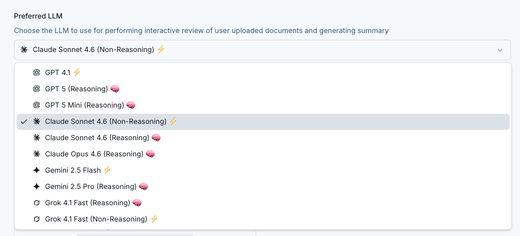
Legal Intake v2.2.5 Alpha strengthens AI-assisted presubmission with counterparty capture and recovery paths, gives teams control over email noise, and improves reliability after deploys.
- Counterparty capture in interactive review – A dedicated counterparty step ensures submissions collect the right counterparty details and signature intent before filing.
- Interactive review resilience – Automatic retries when model output does not match the expected structure; clearer Restart, Retry, and contact-support options when the assistant fails; fallback models when the primary is unavailable, with intake administrators notified when fallback is in use.
- More reliable PDF text extraction – Improved extraction when the primary path fails, so document content is less likely to be lost in review.
- Notification preferences and legal visibility – Introduced categories of email notification that can be turned on or off; assign and reassign notifications CC legal admins so the team stays aligned without hunting threads.
- Platform stability – Error boundaries limit blast radius when something breaks; fewer post-release client/server mismatch issues and clearer handling when connectivity fails.
- Adoption – 700+ requests across 12 intake systems with 475 resolved; vendor and customer intake systems in production; 170+ users onboarded with 70-100 weekly active users.
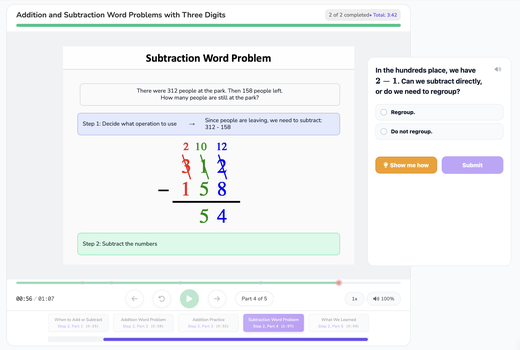
Athena Applets: Strong Quality Metrics & Multi-Grade Expansion
23 new lessons generated, 11 lessons approved this week. Total review time was 82.7 minutes (5.9 minutes per iteration), and the current review queue holds 170 lessons.
- Production output – 23 new lessons generated and 11 lessons approved this week.
- Efficient iteration cycle – 14 total iterations completed in the past 7 days (3 feedback rounds, 11 approvals) with an average of 3.4 comments per lesson (17 total comments).
- Multi-grade coverage – Lessons approved in Grade 3 (2 lessons) and Grade 4 TEKS (9 lessons), with a review queue of 170 lessons ready for validation (Grade 3: 75, Grade 3 Supporting: 20, Grade 4: 4, Grade 5 TEKS: 1, Grade 6: 60, Grade 6 TEKS: 2, Grade 7: 4).
- New lessons by grade – Grade 3: 13 lessons, Grade 3 TEKS: 2 lessons, Grade 4 TEKS: 8 lessons.
- Review time insights – Average review time of 5.9 minutes per iteration (total 82.7 minutes).
- Complete lesson catalog – See the full list of all uploaded lessons across grades in this lesson catalog with direct links to each lesson.
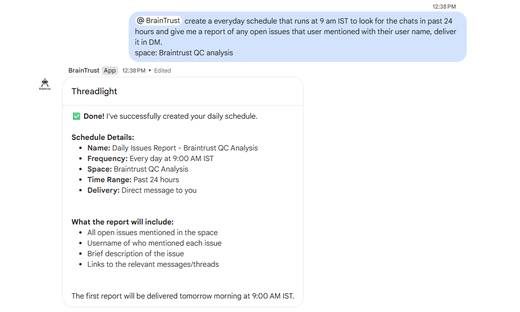
BrainTrust: Natural Language Cron, MCP Server, QuickBooks Integration & Jira Attachments
BrainTrust agents now schedule tasks using plain English, connect to external tools via Model Context Protocol, access QuickBooks financial data, and process Jira ticket attachments automatically.
- Natural Language Cron Scheduling – Schedule recurring agent tasks with simple phrases like ’every Monday at 9am’ or ‘daily at noon’. No cron syntax required — BrainTrust translates your intent into scheduled workflows.
- Model Context Protocol (MCP) Server – Connect BrainTrust agents to external tools and data sources through the standardized MCP interface. Agents can now invoke custom tools, query private APIs, and integrate seamlessly with your existing infrastructure.
- QuickBooks Integration – BrainTrust agents can now read QuickBooks data including invoices, customers, vendors, and financial reports. Automate bookkeeping tasks, generate financial summaries, and answer questions about company finances directly from QuickBooks.
- Jira Attachment Processing – Agents automatically detect and process attachments on Jira tickets (PDFs, images, spreadsheets). Extract insights from uploaded documents, summarize ticket context, and respond with full awareness of attached files.
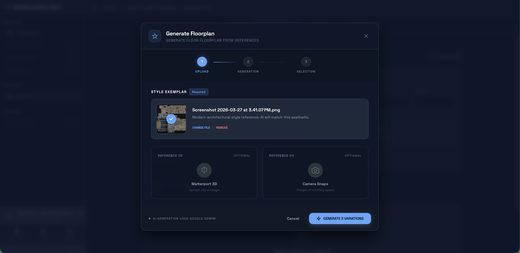
Marauders Map: Floorplan Generation & Tracking Technology Research
A big week for Marauders Map — AI-powered floorplan generation is now live for both individual rooms and full building floors, and in-depth research reports evaluating student tracking technologies have been published to guide the next phase of the project.
- AI Floorplan Generation (Room & Floor) — Upload a style reference, an optional Matterport scan, and up to six camera snapshots, and Gemini generates multiple accurate 2D top-down floorplan variations in a vintage hand-illustrated style. Works in two modes: room (single room, no labels) and floor (full building layout with room annotations). An in-app overlay lets admins compare generated candidates and pick the best one before committing it to the school record.
- Student Tracking Technology Evaluation Reports — A research report has been published comparing six tracking approaches — Rhombus cameras, UniFi G6 PTZ, BLE AoA Only, BLE AoA + Camera Hybrid, UWB Only, and UWB + Camera Hybrid — across identity accuracy, cost, GPU requirements, and privacy. The analysis found that camera-based facial recognition identifies only ~9% of persons, while UWB achieves 100% identity with 10 cm precision and no GPU.